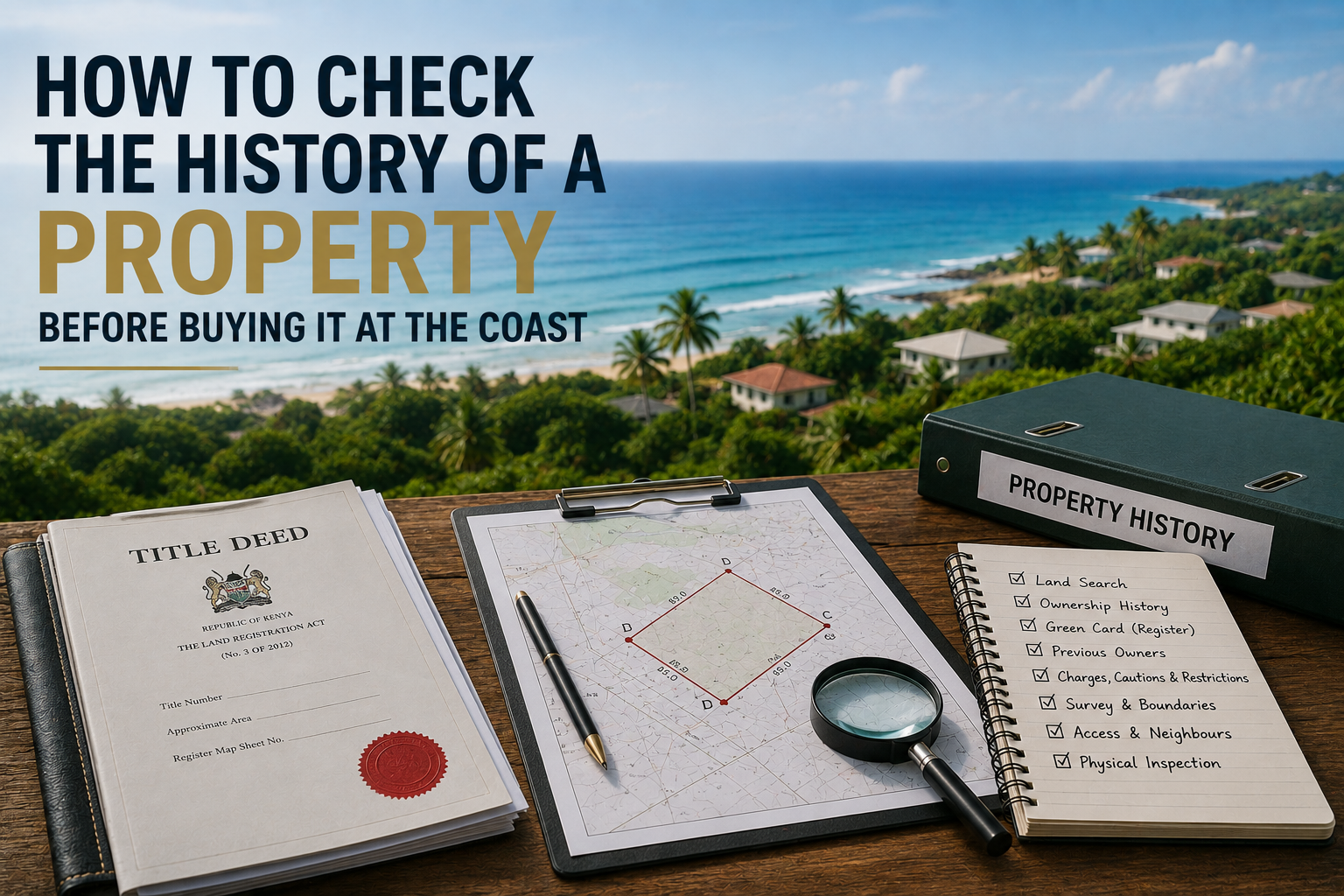
How to Check the History of a Property Before Buying It at the Coast
When buying a property at the Coast, you should go a little further than the title deed. Further than knowing who the seller is and doing a search at the land registry.
You need to understand the history of the property before you commit your money.
Start With the Current Ownership
The first step in checking the history of a property is establishing who currently owns it.
This is where an official land search becomes important. An official land search allows you to verify the registered proprietor and see interests registered against the property. Depending on the register, these can include charges, cautions and restrictions.
The Land Registration Act also recognises certain overriding interests that may affect registered land even where they are not necessarily noted on the register, including some trusts, rights of way and other interests recognised by law.
Once this is established, however, it should be followed by a much bigger conversation.
How Did the Seller Get the Property?
At Affini Consult, this is one of the questions we encourage buyers to ask.
How did the current owner acquire the property?
Was it purchased?
Was it inherited?
Was it allocated by the government or through another authorised process?
Was it subdivided from a larger parcel?
The answer matters because each situation can come with different documents and circumstances that need to be understood.
For example, if someone tells you they inherited the property, you should want to understand the succession process behind the ownership.
If the property came through a subdivision, you should want to understand how the original parcel was divided and whether the resulting parcel matches what is being offered to you.
The title is important, but the story behind the title can be just as important.
What About the Previous Owners?
The Coast has its share of properties where questions can arise around previous ownership, forged documents, incomplete ownership histories and unclear transfers.
You can easily establish who owns the property today but still struggle to get a clear picture of how that person came to own it.
That is something you should not ignore.
You need to establish that there are supporting documents for the way the property was acquired and that the ownership story can be backed up by the relevant records.
One of the steps we recommend is involving your property lawyer to investigate the property’s historical records. Where necessary, your lawyer can obtain the relevant records, including the green card (register), to establish the history of dealings registered against the property.
This can help reveal previous ownership and transactions involving the parcel and give your lawyer a better picture of how the current ownership came about.
But documents are only one part of the investigation.
Leave the Office and Go to the Property
You also need to understand the property on the ground.
This is where we believe a good local property agent can be particularly valuable.
Affini consult which has local expertise and understand the coastal property market doesn’t simply take you to the property, point at the boundaries and tell you the price. We help you understand the property and its surroundings.
We go to the ground and speak to neighbours, local residents and other people familiar with the area to try and understand:
Who has been using the property?
Who owned it before?
Are there people who have been occupying or cultivating part of it?
Are there disputes that people in the neighbourhood are aware of?
How have the boundaries traditionally been understood?
Is there a road or pathway that people have been using to access the property?
Are there local circumstances surrounding the property that may not be obvious from the documents?
This information does not replace an official search, survey, legal advice or other formal due diligence. But it can help uncover questions that need to be investigated further.
Sometimes, the people who have lived around a property for years know things that you will never find in a property listing.
That is why understanding the property on the ground is just as important as understanding the documents in the office.
The Property Should Tell One Consistent Story
At the end of the process, the different pieces of information should begin to fit together.
The seller’s story should make sense.
The ownership documents should support that story.
The historical records should not raise unexplained questions.
The survey information should correspond with what exists on the ground.
The boundaries should make sense.
The access should be understood.
And what you hear from the people around the property should not reveal major issues that have been left unexplained.
If something doesn’t add up, don’t rush to complete the purchase simply because you like the property.
Stop and investigate.
Sometimes there is a perfectly reasonable explanation. Sometimes another document or professional opinion is all that is needed. And sometimes, the information you uncover tells you that the property is not worth the risk.
Before You Buy, Know the Story Behind the Property
Buying property at the Coast should be about more than finding a beautiful location, negotiating a good price and confirming that a title deed exists.
You need to know what you are actually buying.
At Affini Consult, we believe that is where good property advice begins.
Our role is not simply to show you what is available. We help buyers understand the property, ask the right questions, investigate what needs to be investigated and connect the different pieces of information before making a decision.
Because a property can have a title and still leave important questions unanswered.
Before you commit your money, understand the story behind the property.